

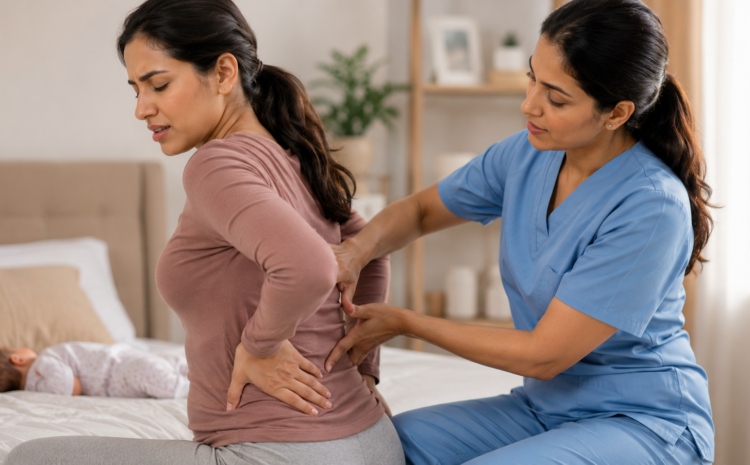
Having a baby changes your body in profound ways and for many new mothers, one of the most persistent reminders is back pain. If you’re struggling with back pain after pregnancy, you are not alone: studies suggest that more than half of new mothers experience some form of postpartum back pain, and for many, it lingers well beyond the six-week postpartum checkup. Pregnancy shifts your center of gravity, loosens your ligaments, weakens your core, and places extraordinary demands on your spine and pelvis and delivery, whether vaginal or by C-section, adds its own physical impact. The good news is that postpartum recovery from back pain is absolutely possible, especially with the right care, the right exercises, and the right support team behind you.
Why Does Postpartum Back Pain Happen?
Your body spent nine months adapting to carry and deliver another human being, and those adaptations don’t simply reverse the moment your baby arrives. Understanding the causes of back pain after pregnancy helps you recognize that what you’re feeling isn’t weakness it’s a predictable consequence of an extraordinary physical process.
Here are the most common contributors to postpartum back pain:
- Relaxin, a hormone your body produces throughout pregnancy to loosen ligaments and prepare your pelvis for delivery, doesn’t disappear immediately after birth especially if you’re breastfeeding and this continued joint laxity leaves your spine and sacroiliac joints less stable and more vulnerable to strain.
- Postural shifts during pregnancy gradually move your center of gravity forward, causing your lower back to arch more deeply (a condition called lordosis), and those compensatory muscle patterns often persist after delivery, placing continued strain on your lumbar spine.
- Weakened core and pelvic floor muscles, which are stretched and sometimes torn during pregnancy and delivery, are no longer able to properly support your spine — and without that deep muscular scaffolding, your back has to work much harder to hold you upright.
- Breastfeeding posture is a surprisingly significant contributor, since hours spent hunched over a nursing baby daily — without proper back support — creates chronic tension in the mid and lower back and contributes to rounded shoulders and neck pain.
- C-section recovery places particular demands on your back because the abdominal muscles that were cut during surgery are temporarily out of commission, shifting the load-bearing work to your back muscles before you’ve had adequate time to heal.
- Epidural placement, while not a cause of permanent damage in most cases, can leave localized soreness at the injection site in the lower back for several weeks after delivery, which many mothers experience as persistent back pain.
Types of Postpartum Back Pain
Lower Back Pain
Lower back pain is the most common form of postpartum back pain and usually centers around the lumbar spine the five vertebrae in the curve of your lower back.
- It often feels like a deep, aching soreness that worsens with prolonged standing, sitting, or lifting your baby repeatedly throughout the day.
- The pain may radiate into the buttocks or upper thighs, particularly if tight hip flexors or piriformis muscles are contributing to the problem.
- It frequently stems from a combination of weakened core muscles, residual postural habits from pregnancy, and the physical demands of new parenthood.
Tailbone (Coccyx) Pain
Coccydynia — pain at the very base of the spine — is particularly common after vaginal delivery and can make sitting deeply uncomfortable for weeks or months.
- It may result from the coccyx being bruised, displaced, or fractured under the pressure of labor and delivery, especially with a large baby, prolonged pushing, or an assisted delivery using forceps or vacuum.
- Sitting on hard surfaces, transitioning from sitting to standing, and activities that put direct pressure on the tailbone tend to aggravate the pain.
- A specially designed donut or coccyx-relief cushion can significantly reduce discomfort while the area heals.
Sacroiliac Joint Pain
The sacroiliac (SI) joints connect your sacrum — the triangular bone at the base of your spine — to your pelvis, and sacroiliac joint pain postpartum is both common and frequently misidentified as general lower back pain.
- SI joint pain typically presents as a sharp or aching discomfort on one or both sides of your lower back, just above the buttocks, and may extend into the hip or groin.
- It is directly linked to the loosening effects of relaxin, which allows the SI joints to become hypermobile and unstable during and after pregnancy.
- Pelvic floor rehabilitation and targeted stabilization exercises are among the most effective treatments for this type of pain.
When Is Back Pain a Red Flag?
Most postpartum back pain is musculoskeletal and responds well to conservative care, but certain symptoms require prompt medical attention. Contact your doctor or go to an emergency room if you experience any of the following:
- Severe, shooting nerve pain that travels from your lower back down one or both legs may indicate a herniated disc or nerve compression that needs urgent orthopedic evaluation.
- Numbness or tingling in your legs, feet, or groin is a sign that nerve involvement may be present, and it should never be dismissed as normal postpartum discomfort.
- Bladder or bowel dysfunction — including incontinence, inability to urinate, or loss of sensation in the pelvic area — alongside back pain can signal cauda equina syndrome, a rare but serious spinal emergency.
- Fever combined with back pain may indicate a spinal infection, particularly relevant if you had an epidural or spinal block during delivery.
- Pain that worsens rather than gradually improves after the three-month mark, or that is severe enough to prevent you from caring for your baby, warrants a full orthopedic assessment rather than continued waiting.
Orthopedic Care Options for Postpartum Back Pain
Physical Therapy and Pelvic Floor Rehabilitation
Working with a women’s health physical therapist is often the single most effective step you can take for postpartum recovery, and it addresses the root causes of back pain rather than just the symptoms.
- Pelvic floor rehabilitation involves an internal and external assessment of the muscles that support your bladder, bowel, and uterus — muscles that directly influence spinal stability and are almost universally affected by pregnancy and delivery.
- A physical therapist will design a progressive exercise program that safely rebuilds your deep core strength, corrects postural imbalances, and gradually restores full function without risking re-injury.
- Manual therapy techniques, including soft tissue release and joint mobilization, can address muscle tension and restricted movement that contributes to persistent pain.
Orthopedic Consultation and Imaging
If your pain is severe, not improving with conservative care, or accompanied by nerve symptoms, an orthopedic consultation gives you a clearer picture of what’s happening structurally.
- Your orthopedic doctor may order X-rays to assess bony alignment, or an MRI to evaluate soft tissues including discs, ligaments, and nerve roots — both are safe after delivery and will not affect breastfeeding.
- A formal diagnosis allows your care team to create a more targeted treatment plan rather than relying on a trial-and-error approach.
- Orthopedic care postpartum is not a last resort — seeking it early can actually shorten your overall recovery time significantly.
Pain Management for Breastfeeding Mothers
Managing pain effectively matters both for your comfort and for your ability to care for your baby, and there are safe options available even if you are breastfeeding.
- Acetaminophen (Tylenol) is generally considered safe during breastfeeding and can provide meaningful relief for mild to moderate back pain when taken as directed.
- Ibuprofen is also widely considered compatible with breastfeeding at standard doses and offers the added benefit of reducing inflammation alongside pain.
- Corticosteroid injections for specific spinal or SI joint pain can be discussed with your orthopedic doctor, who can advise on timing and any temporary pumping precautions if needed.
At-Home Recovery Tips
Consistent daily habits make a significant difference in how quickly and fully your back recovers. These strategies are safe to begin in the early postpartum weeks:
- Pelvic tilts, cat-cow stretches, and diaphragmatic breathing are gentle foundational exercises that reactivate your deep core and pelvic floor without straining healing tissues, and most women can begin these within the first week or two after delivery.
- Daily walking is one of the most underrated recovery tools — starting with short, flat walks and gradually increasing distance helps restore circulation, gently mobilize the spine, and lift your mood without overloading tender tissues.
- Correct breastfeeding posture means bringing your baby to your breast rather than hunching down to meet them; use a nursing pillow, firm back support, and arm rests to keep your spine neutral during feeds.
- Ergonomic babywearing with a structured carrier that distributes your baby’s weight evenly across your hips and shoulders can dramatically reduce the back strain of carrying a growing infant.
- Sleep positioning matters more than most new mothers realize — sleeping on your side with a pillow between your knees supports spinal alignment, and avoiding prolonged lying on your stomach reduces lumbar strain.
- Heat and cold therapy are simple, safe tools: apply a warm pack to tense muscles to ease stiffness, and use ice for acute soreness or inflammation, always with a cloth barrier to protect your skin.
- Avoid heavy lifting beyond your baby’s weight for the first six to eight weeks, and always lift by bending at the knees and engaging your core rather than hinging at your lower back.
How Long Does Recovery Take?
Recovery from postpartum back pain is rarely linear, and the timeline varies considerably from one person to the next. Understanding what’s typical can help you set realistic expectations without losing hope.
For most women, the pattern looks something like this:
- By 6 weeks, hormone levels begin to shift and acute soreness from delivery typically starts to ease, though many women are still very much in the midst of recovery at this stage.
- By 3 months, women who have engaged in consistent physical therapy and gentle exercise often notice meaningful improvement in pain levels and core strength, though not complete resolution.
- By 6 months, the majority of postpartum back pain resolves or becomes well-managed with ongoing exercise — but for some, particularly those with SI joint dysfunction or significant diastasis recti (separation of the abdominal muscles), recovery extends beyond this point.
Factors that can slow recovery include continuing to breastfeed (which prolongs relaxin production), a difficult or prolonged labor, C-section back pain from surgical healing, returning to high-impact activity too soon, and inadequate sleep — which, with a newborn, is genuinely difficult to control.
Emotional Impact of Chronic Back Pain Postpartum
Pain that doesn’t resolve quickly takes a toll that goes well beyond the physical, and it’s important to acknowledge that honestly rather than pushing through in silence.
- Chronic pain and postpartum depression frequently overlap — persistent pain depletes the emotional reserves you need for new motherhood, and depression in turn lowers your pain threshold, creating a cycle that requires attention from both a physical and mental health perspective.
- Dismissing your pain as “just part of having a baby” delays the care you deserve; postpartum back pain is common, but common does not mean you simply have to accept it or wait it out alone.
- Asking for help is not failure — whether that means asking your partner to handle more lifts and carries, accepting meals from family, or telling your doctor that your pain is affecting your daily functioning, advocating for yourself is an act of care for both you and your baby.
- Connecting with other new mothers — through postnatal groups, online communities, or pelvic health support networks — can reduce the isolation that chronic pain creates and remind you that what you’re experiencing is both real and shared.
Conclusion
Your body did something remarkable, and it deserves real support in recovering from it. Postpartum back pain is not a sign that something is permanently wrong, nor is it a condition you simply have to endure until it fades on its own. With early orthopedic care, targeted pelvic floor rehabilitation, and the right at-home habits, most new mothers recover fully and go on to feel stronger than they did before pregnancy. You are not overreacting by seeking help. You are not too busy to prioritize your own healing. Reach out to your care team, start small, and trust the process — you deserve to feel like yourself again.
Frequently Asked Questions
Q: How long does postpartum back pain last?
For most new mothers, postpartum back pain improves meaningfully within three to six months with appropriate care and exercise. Mild to moderate lower back soreness directly related to delivery often begins to ease within the first six weeks as hormone levels normalize and core muscles begin to recover. However, without targeted rehabilitation, some women experience pain that persists for a year or longer. The most important factor in how quickly you recover is whether you seek appropriate care pelvic floor physical therapy in particular rather than simply waiting for the pain to resolve on its own.
Q: Is it safe to do physical therapy while breastfeeding?
Yes, physical therapy is completely safe while breastfeeding and is in fact one of the most recommended forms of postpartum care. A women’s health physical therapist will design your program specifically around your recovery stage and feeding status. There are no exercises or manual therapy techniques used in standard postpartum physical therapy that pose any risk to your milk supply or your baby. If your therapist recommends any topical treatments like anti-inflammatory gels, simply mention that you are breastfeeding so they can confirm compatibility.
Q: Can an epidural cause long-term back pain?
This is one of the most common concerns among new mothers, and the reassuring answer is that research consistently shows epidurals do not cause long-term back pain. The localized soreness at the injection site that many women experience in the weeks after delivery is real, but it typically resolves within a few months. The back pain most commonly attributed to epidurals is more likely related to the prolonged positioning required during labor, the physical demands of delivery, and the postural and muscular changes of pregnancy itself — all of which are treatable with physical therapy and time.
Q: When should I see an orthopedic doctor for postpartum back pain?
You should consider an orthopedic consultation if your back pain is severe enough to limit your ability to care for your baby, if it is accompanied by nerve symptoms like numbness or tingling, if it hasn’t improved after six to eight weeks of conservative at-home care, or if it is getting noticeably worse rather than better. You do not need to wait for a crisis — seeing an orthopedic specialist early allows for a more accurate diagnosis, a targeted treatment plan, and a shorter overall recovery. Early intervention is almost always more effective than delayed care.
Q: What exercises are safe for postpartum back pain?
In the early weeks after delivery, the safest exercises are gentle and low-load: pelvic floor contractions (Kegels), pelvic tilts lying on your back, diaphragmatic breathing, and short walks on flat surfaces. As your strength returns — typically from six weeks onward, with your provider’s clearance — you can progress to cat-cow stretches, glute bridges, bird-dog exercises, and gentle yoga. Swimming is an excellent option once any wounds have fully healed. The exercises to avoid in early recovery include traditional crunches, sit-ups, heavy lifting, running, and any movement that causes pain or increases abdominal doming, which may indicate diastasis recti.